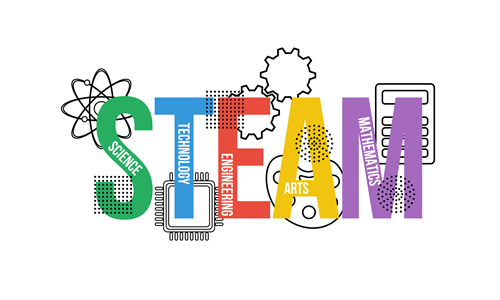
What Is STEAM Education?
STEAM education combines Science, Technology, Engineering, Arts, and Mathematics into a unified learning approach that encourages students to solve real-world problems through creativity, innovation, and critical thinking. Unlike traditional subject-based learning, STEAM emphasizes interdisciplinary connections that help students understand how knowledge from different fields works together.
As industries increasingly seek individuals who can think creatively and adapt to complex challenges, STEAM education has become an important component of preparing students for future careers and lifelong learning. This approach helps students develop both technical expertise and creative problem-solving abilities.
STEM vs STEAM: What’s the Difference?
While STEM focuses on Science, Technology, Engineering, and Mathematics, STEAM incorporates the Arts to encourage creativity, communication, design thinking, and human-centered innovation.
Adding the arts helps students:
- Think creatively
- Improve communication skills
- Design user-focused solutions
- Develop visual literacy
- Approach challenges from multiple perspectives
This combination allows students to become more effective innovators and problem solvers. The existing article already discusses how arts contribute creative thinking to technical disciplines.
Real-World Examples of Interdisciplinary STEAM Learning
STEAM principles can be found in many careers and industries:
Healthcare & Medical Illustration
Medical illustrators combine scientific knowledge with artistic skills to communicate complex medical information.
Architecture
Architects use engineering, mathematics, technology, and artistic design principles to create functional and visually appealing structures.
Robotics
Robotics integrates engineering, coding, mathematics, design thinking, and creativity to solve practical problems.
Product Design
Successful products require technical development as well as user-centered design and communication strategies.
These examples demonstrate how interdisciplinary learning prepares students for real-world challenges.
Benefits of STEAM Education for Students
STEAM learning helps students develop:
- Critical thinking
- Creativity
- Collaboration
- Communication
- Research skills
- Innovation mindset
- Leadership abilities
- Problem-solving skills
These competencies are increasingly valued by colleges, scholarship programs, and employers.
How DRIPBL Uses Interdisciplinary STEAM Learning
At DRIPBL, students engage in research, innovation, entrepreneurship, mentorship, and project-based learning experiences that combine multiple STEAM disciplines.
Students participate in:
- Research projects
- Innovation challenges
- STEM enrichment programs
- Entrepreneurship experiences
- Internships
- Leadership development activities
This interdisciplinary approach helps learners connect classroom knowledge with real-world applications.

FAQs
STEAM stands for Science, Technology, Engineering, Arts, and Mathematics.
STEAM education develops critical thinking, creativity, collaboration, communication, and problem-solving skills that help students succeed academically and professionally.
STEAM includes the Arts in addition to Science, Technology, Engineering, and Mathematics, encouraging creativity and design thinking alongside technical learning.
Many careers rely on STEAM skills, including engineering, healthcare, architecture, robotics, software development, product design, animation, and scientific research.
STEAM encourages students to combine knowledge from multiple disciplines to create new ideas, solve problems, and develop innovative solutions.